
Your Cart is Empty
Free domestic shipping | Complimentary ring Re-sizing | Flexible Layaway Available
Free domestic shipping | Complimentary ring Re-sizing | Flexible Layaway Available
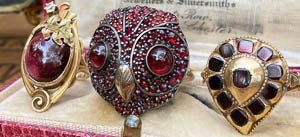


For centuries, antique micromosaics have captivated collectors with their breathtaking detail and almost impossibly fine craftsmanship. These miniature works of art—often set into gold jewelry or mounted as decorative plaques—embody a marriage of technical mastery and artistic vision that few art forms can rival.

At the heart of every micromosaic lies the tesserae—the tiny, hand-cut pieces of glass or stone that form the intricate images. Unlike traditional mosaics, where tesserae might be relatively large, micromosaic tesserae can be so fine that they resemble grains of sand.

Shop for this micromosaic HERE
Artisans created these tesserae by:
Drawing molten glass into filaments: Colored glass was heated and stretched into long, thread-like rods, sometimes thinner than a sewing needle.
Cutting into segments: Once cooled, the rods were carefully sliced into minuscule chips of uniform size. Each chip became a single “pixel” in the larger design.
Sorting by color and shade: Subtle variations in hue were essential. Master mosaicists often worked with hundreds of tones to create lifelike shading and depth.
The process was painstaking, requiring both scientific precision and an artist’s eye.
The Victoria and Albert Museum has a wonderful video depicting the making of micromosaics. You can watch the video here:

Shop for this micromosaic HERE
Once prepared, tesserae were placed—one by one—into a bed of adhesive, often black cement or mastic. Using fine tools, artisans aligned the tesserae so closely that the seams were barely visible, giving the finished image an almost painterly smoothness.
Common themes included:
Roman ruins and landscapes: Souvenirs for wealthy Grand Tour travelers.

Floral sprays: Lifelike blossoms, often framed in gold jewelry.

Animals and birds: Owls, doves, and even mythological creatures, rendered in exquisite detail.

Each micromosaic could take weeks or months to complete, depending on its size and complexity.
For collectors and connoisseurs, antique micromosaics are prized not just for their beauty, but for what they represent: the ingenuity of artisans who pushed the limits of materials and scale. High-quality examples—particularly those from 18th- and 19th-century Rome—are increasingly scarce on the market.
Owning one is like holding a fragment of history in miniature, a reminder that art is not defined by size but by vision and patience.

Shop for this micromosaic HERE